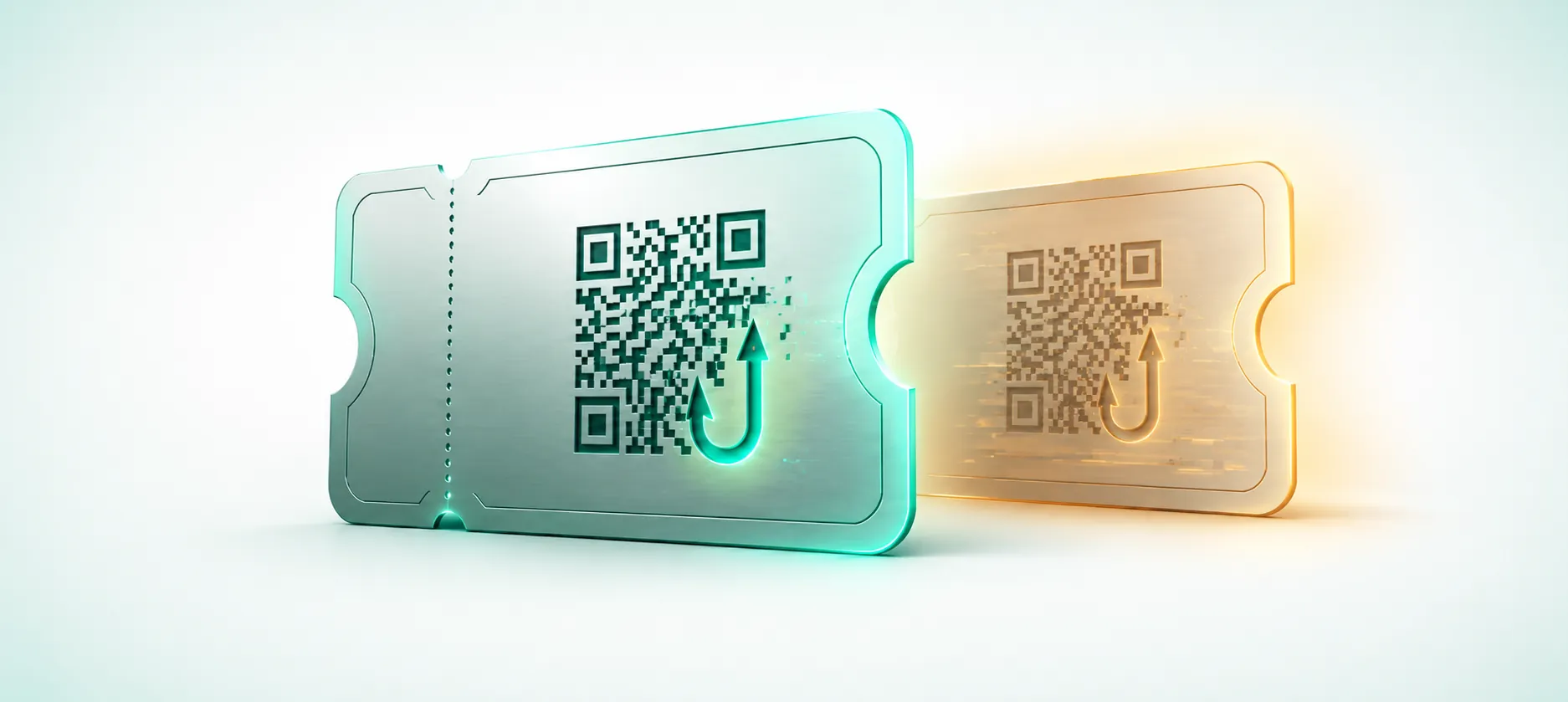
Most fake World Cup tickets don't look fake. They look like a great deal from a seller who seems normal, priced a little under what everyone else is asking. You pay and get a QR code that scans fine in your photos app. So, you stop worrying and start getting excited for the game.
But a ticket QR code can't be judged by appearance alone, and the image on your phone looks identical whether it's genuine, a screenshot someone sold to five people, or a fake made an hour ago. So, unless you do your homework, you might not find out you've bought a fake ticket until you're at the turnstile.
What you need to know
- Scammers copy FIFA branding and ticket designs, so a professional-looking page is not proof it is real.
- Buying only through FIFA's official channels removes most of the risk before it starts.
- A QR code by itself does not prove a ticket is valid or that you own it.
- Paying strangers by bank transfer or cryptocurrency usually leaves little chance of a refund.
- Reporting a scam quickly to your bank and the authorities can reduce the damage.
- Treating unexpected QR codes and ticket links with suspicion lowers the chance of landing on a phishing page.
What are FIFA World Cup ticket scams?
FIFA World Cup ticket scams are fraud schemes that sell fake or nonexistent tickets, or use a ticket offer to steal your money and personal data. They show up on spoofed websites, resale marketplaces, social media, and messaging apps.
There are a few different scams. Some scammers want a one-time payment for a ticket that never arrives. Others are after the details you enter at checkout, such as your card number and account passwords, which they can reuse or resell.
Why are FIFA World Cup 2026 ticket scams increasing?
Big events concentrate demand into a short window, and scarcity creates an opportunity for fraudsters. Tickets sell out, prices climb, and fans hunt for last-minute seats once play begins. And, the bigger the tournament, the more potential targets there are for ticket scams.
The 2026 tournament is the largest men's World Cup so far, with 48 teams across 16 host cities in three countries. In May 2026, the FBI's Internet Crime Complaint Center (IC3) warned that criminals were spoofing FIFA websites to sell fake tickets and collect personal information. A sold-out match paired with a lower-than-expected price creates urgency than can override caution in buyers.
How can you tell if a FIFA World Cup ticket is fake?
Most fake tickets share a handful of warning signs. If you notice any one of these on its own, it’s worth pausing before you buy. Spot two or more together, and the offer is worth walking away from.
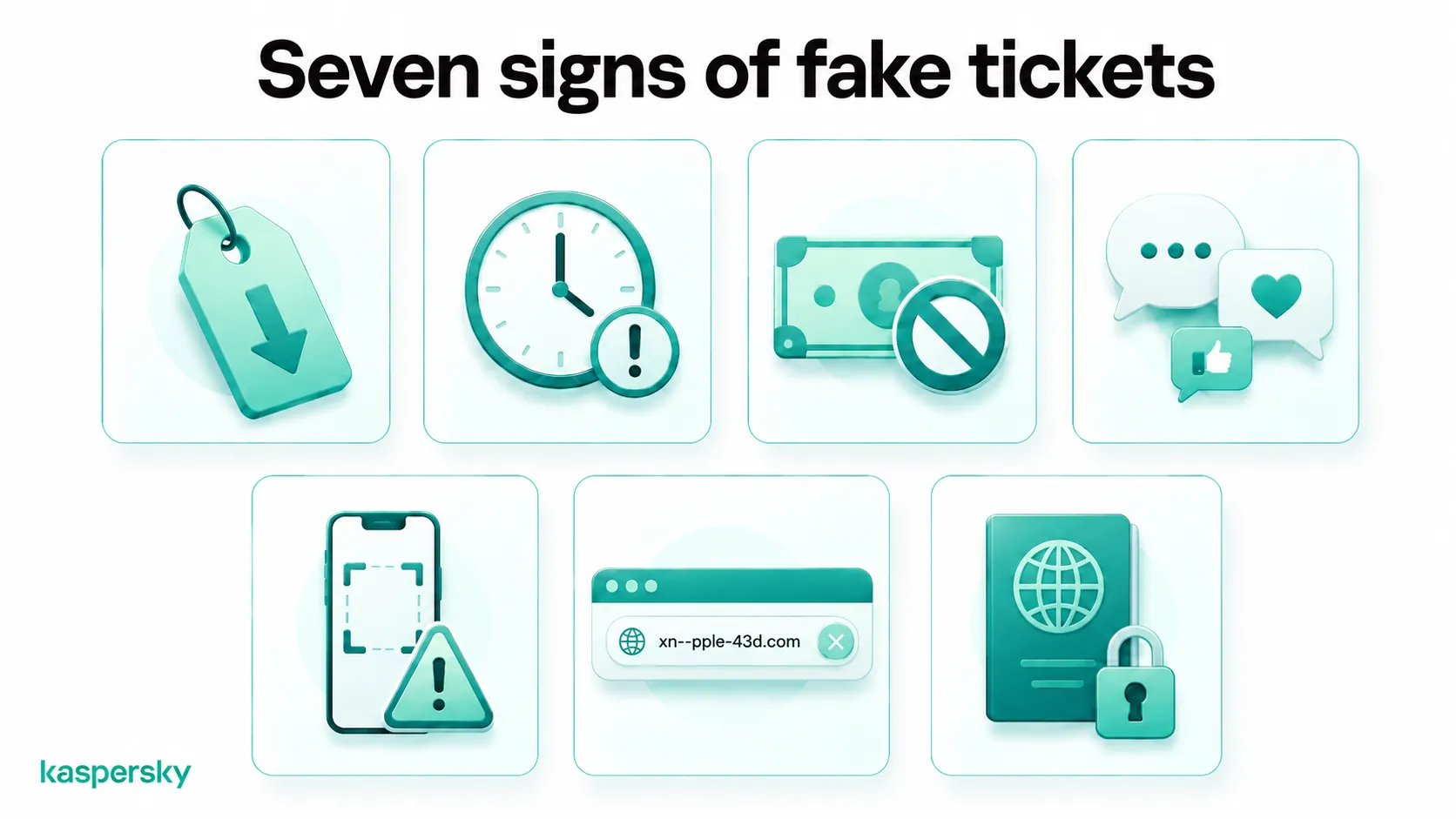
7 red flags that a FIFA World Cup ticket might be fake
- The price looks too good. Deep discounts on sold-out matches are a common lure but, in reality, real demand pushes prices up, not down.
- The seller pushes you to hurry. Claims that someone else is about to buy are meant to stop you from checking. A genuine seller can wait.
- Payment is by bank transfer, gift card, or crypto. These methods are hard to reverse. Any request that avoids a credit card or escrow service is a warning sign.
- The listing is on social media or a messaging app. Offers in WhatsApp, Telegram, or Facebook groups come with no buyer protection and are easy to fake.
- The ticket "proof" is just a screenshot. A genuine seller can hold the ticket inside the official platform, not just show you an image.
- The web address is slightly off. A misspelled domain, or an ending that is subtly wrong, can point to typosquatting.
- The seller asks for extra personal data. A passport scan or an account password is not needed to sell you a ticket and may be used for identity fraud.
Are FIFA World Cup 2026 QR codes safe?
A QR code is a link or a small piece of data embedded inside a square barcode, so the code itself is neither safe nor unsafe. The risk comes from where it sends you and from how easily an image of one can be copied.
Can World Cup ticket QR codes be copied?
A QR code is an image that can be copied. It can be screenshotted, forwarded, or printed as many times as someone likes. That is why a screenshot of a QR code does not prove the sender owns a valid ticket.
Official digital tickets usually guard against this. Many refresh the code on a set schedule, or reveal it inside the official app only close to kickoff, so a static screenshot taken hours earlier may not scan at the gate. If the seller can only show you a screenshot, rather than a ticket held inside the official platform, proceed with caution.
What is QR code phishing (quishing)?
Quishing is phishing that swaps the clickable link for a QR code. You scan what looks like a ticket, a refund, or a venue check-in, and the code opens a fake website that asks for your login or payment details.
The destination is hidden inside the code, so you cannot read the address before you scan. Criminals print these codes on flyers, email them as fake confirmations, or paste them over real ones. Before you act on a scanned link, check the address your phone shows rather than trusting the code.
How do FIFA World Cup ticket scams work?
Ticket scams follow a few repeatable patterns across the places fans look for seats. Once you recognize the setup, each one is easier to catch.
How do fake FIFA World Cup websites trick fans?
Fake sites copy FIFA's branding, layout, and even its checkout flow, then get you there through typosquatted domains or sponsored search ads. Once you land, a fake checkout or login screen collects your card details, personal information, or account password.
Scammers get you to these sites in a couple of ways. One is typosquatting, where a domain uses a small misspelling, such as fiffa in place of fifa, or swaps the ending, for example a .org in place of a .com, hoping you mistype or do not look closely.
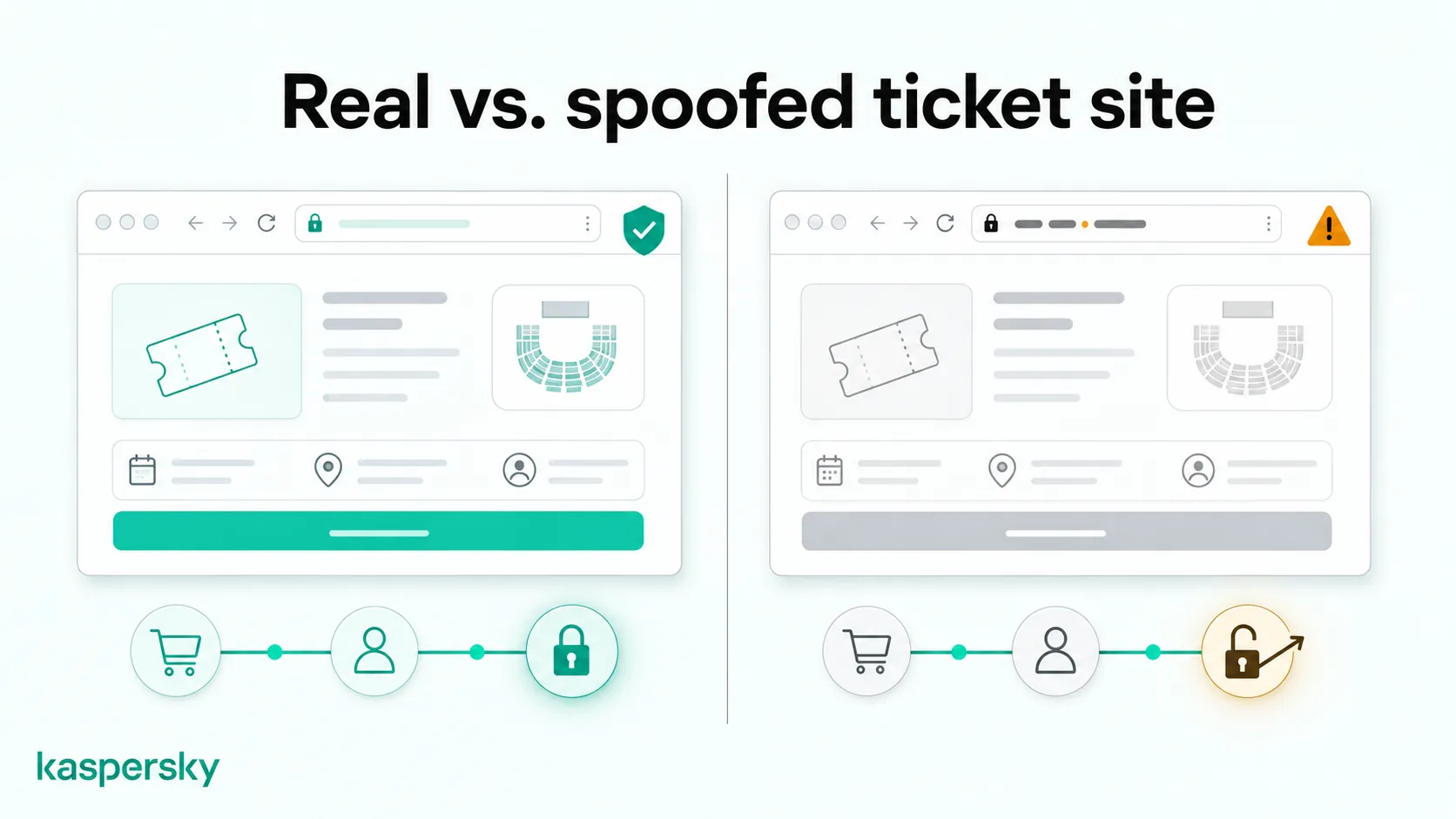
Another is sponsored search results, paid ads that sit above the real listing and route clicks to a lookalike page. The FBI has advised fans to type fifa.com into the address bar directly and to skip sponsored links when searching.
Some cloned sites are close to pixel-perfect, so always check the address bar, not website design.
How do fake World Cup resale and hospitality scams work?
Fake World Cup resale and hospitality scams work by advertising tickets or hospitality packages that don't exist, building trust with the buyer, and then collecting payment through a method that can't be reversed. Once the money is sent, the seller disappears and no tickets ever arrive.
Away from fake websites, a lot of ticket fraud happens person to person, through resale marketplaces, fan groups, or direct messages. The offer often undercuts everyone else on price. The scammer answers questions and shares screenshots first, then asks for payment once you trust them. Hospitality and bundle offers (match tickets plus travel or lounge access) are especially common, because the higher price justifies a bigger upfront payment.
What should you do if you've been scammed buying World Cup 2026 tickets?
If you act quickly to limit the damage and report the scam, you reduce opportunities for the scammer to acces your money and your data.
How can you limit the damage?
- Contact your payment provider. Call your bank or card issuer, report the transaction, and ask about a chargeback or a fraud claim. A card payment is often easier to dispute than a transfer, so mention how you paid for the tickets.
- Secure your accounts. Change the password on any account whose details you entered, and turn on two-factor authentication. Update that password anywhere else you reused it, since one leaked login can open the rest.
- Scan your device for malware. If you clicked a link or downloaded anything, run a full security scan. A scan can flag malware left behind to harvest more of your data.
- Watch your money. Check your bank and card statements for a while and consider placing a fraud alert with your credit provider. Fresh charges can show up days after the first hit.
Spot fake ticket sites before you pay
Kaspersky Premium offers real-time malware scanning and anti-phishing that blocks fake sites and dangerous links. It can flag a spoofed ticket page before you enter your card details and check your device if you have already clicked.
Try Premium for freeWhere should you report a FIFA World Cup ticket scam?
If you’ve been scammed, you’ll help yourself and potentially prevent others falling for the same scam by covering these bases:
- Tell your payment provider and the platform. Your bank, your card issuer, and the marketplace or app where you found the offer all need to know.
- Report the fraud to the authorities. In the US, file with the FBI's Internet Crime Complaint Center and the FTC, including the fake domain, what you shared, and any payment details. Outside the US, use your national fraud reporting service.
- Flag it to FIFA. Report fake tickets, sites, or sellers through FIFA's official channels so they can act on the impersonation.
How can you stay safe when buying FIFA World Cup tickets?
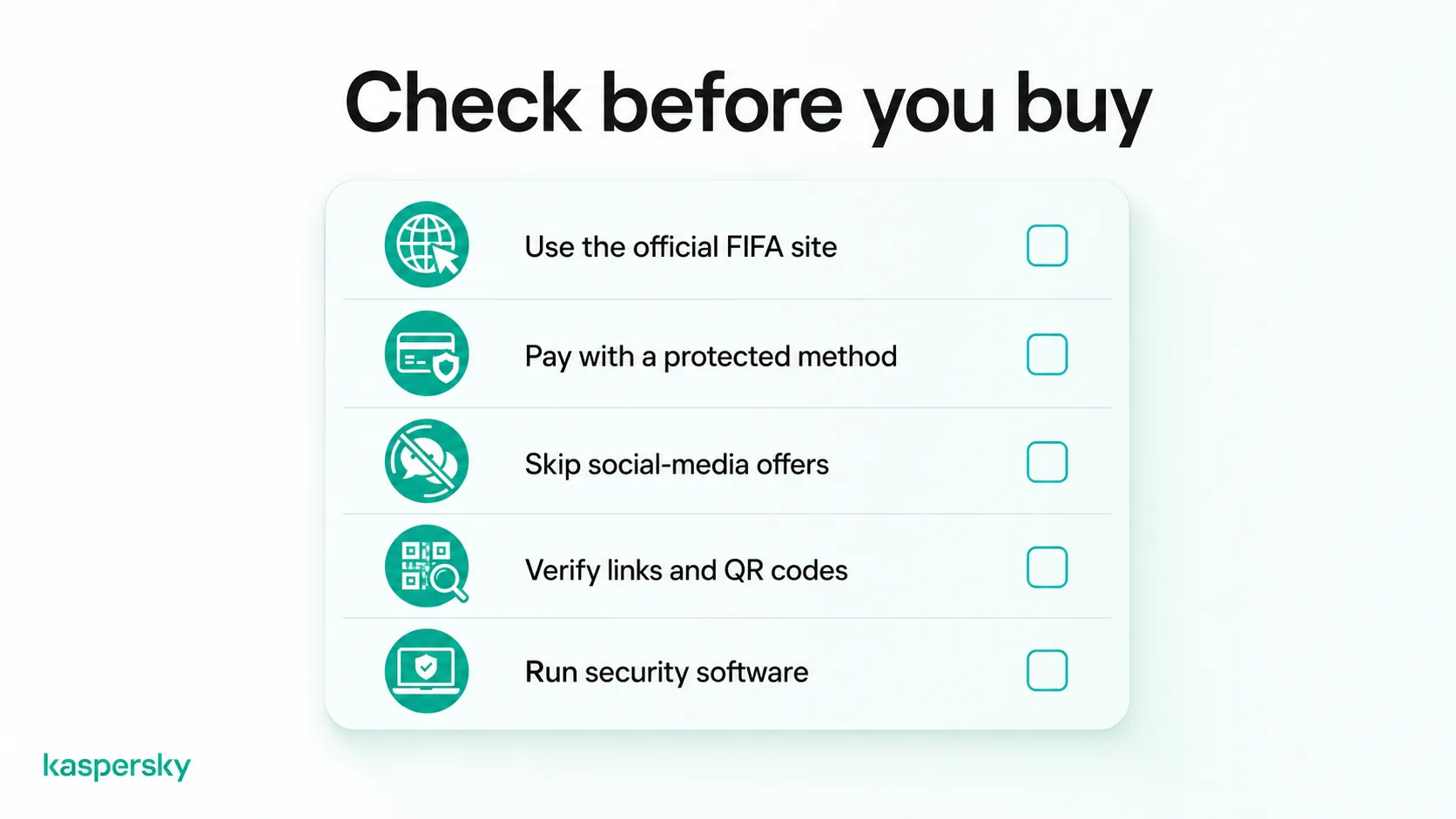
A few habits remove most of the risk before it reaches you. Before you buy, run through this quick checklist:
- Start at FIFA's official platform and type the address yourself.
- Pay with a credit card or another method that offers buyer protection.
- Skip offers on social media and messaging apps.
- Don't trust a QR code or link until you've checked where it leads.
- Keep your devices and accounts protected with strong passwords and reputable security software such as Kaspersky Premium, which can help block phishing sites and catch malware.
 Related Articles:
- What is Cybercrime: Risks and Prevention
- What is quishing and how does it work in cyber attacks?
- How can you identify scam websites effectively?
- How to spot fake login pages before entering your credentials?
Related Products:
FAQs
Can I transfer a FIFA World Cup ticket to someone else?
Usually yes, but only through the official ticketing platform's transfer feature, never by sending a screenshot. An official transfer reassigns the ticket to the new holder and voids the old code. Sharing a screenshot exposes both people to duplicate-ticket fraud.
Is it safe to buy FIFA World Cup tickets through Facebook, WhatsApp, or Telegram?
It’s risky and best avoided. These channels offer no buyer protection, sellers are easily impersonated, and payments often use hard-to-reverse methods. Even a genuine-looking profile and shared screenshots can be faked, so official channels remain the safer route.
Can someone use my FIFA World Cup ticket if they have a screenshot of the QR code?
Possibly, which is why you should never share one. If your QR code is static, whoever scans it first at the gate gets in, leaving you locked out. Keep the code inside the official app until the moment of entry.