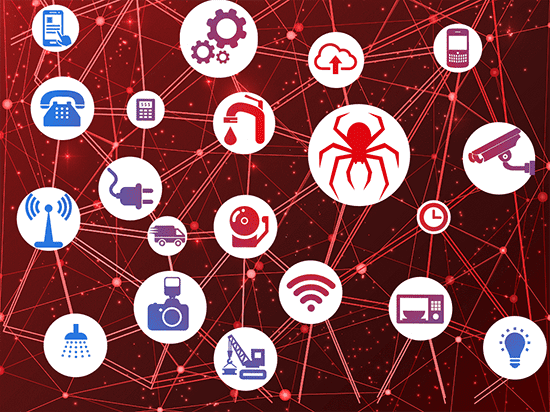
Participating at the 7th E-Crime & Information Security Summit in Abu Dhabi on the 9th of September, 2015, Mohammad Amin Hasbini, Senior Security Researcher of the Global Research & Analysis Team at Kaspersky Lab will speak about the rising trend of the Internet of Things and security risks associated with it.
Participating at the 7th E-Crime & Information Security Summit in Abu Dhabi on the 9th of September, 2015, Mohammad Amin Hasbini, Senior Security Researcher of the Global Research & Analysis Team at Kaspersky Lab will speak about the rising trend of the Internet of Things and security risks associated with it.
The conference is set to deliver a unique perspective on evolution within the cyber threat landscape, as well as innovative frameworks that can be adopted to manage existing and emerging challenges. Kaspersky Lab’s participation is aimed at educating attendees on the threats that may arise from the Internet of Things (IoT) phenomenon.
IoT has been recognized for its huge potential. IDC forecasts that the IoT solutions market will expand from $1.9 trillion in 2013 to $7.1 trillion in 2020, making it 3.7 times larger. However, with more and more devices connected to the internet and to each other, vulnerabilities to cyber-attacks inevitably surface. IoT poses a variety of potential security risks that could be exploited to get money and users’ personal information, facilitate attacks on critical systems and create harmful effects on the economy of ‘Smart Cities’.
Gadgets which record personal biometric, health, and geographical information — such as popular wearable devices, also fall under the category of IoT. However, in terms of the degree, the risk they pose is not overwhelming, because you can easily stop using them. The IoT that has a higher degree of vulnerability mostly consists of systems or services traditionally called “M2M” (Machine to Machine). Those are the ones closely integrated (or expected to be integrated) with environmental/social infrastructure, thus cybersecurity is as highly critical as the critical infrastructure in question is. For example, by taking over traffic control systems, one can panic traffic, intentionally trigger a car accident, or even disrupt public transportation systems. Those might affect our daily lives and economy as well.
“Every smart device included in a given network is an impending threat as it can potentially be accessed by any person with the means and malicious intent. They can make our lives more efficient, but they still have a long way to go in terms of security. We at Kaspersky Lab advice operators and developers of IoT systems to always keep security in mind and take according measures, including: encrypt data and communication, do not rely totally on ‘ready-only’ approach, have any measure to detect anomalies with every node, arrange penetration tests,” said Mohammad Amin Hasbini.
Kaspersky Lab is also sharing its experience, participating and in the ‘Securing Smart Cities’ not-for-profit global initiative that aims to solve the existing and future cybersecurity problems of smart cities through collaboration and information-sharing between organizations: companies, governments, media outlets, not-for-profit initiatives and individuals across the world involved in the creation, improvement and promotion of smart and safe technologies for modern cities.