 kids
kids
Artificial intelligence has gone from a technological novelty to a tool so ordinary that kids in elementary school are already using it. Trying to ban children from using AI at this point makes about as much sense as it once did to ban search engines or Wikipedia.
Today we’re breaking down how chatbots actually work, and how to teach your kid to use AI as a study aid rather than a substitute for thinking for themselves
Explain to your child (and yourself) how AI works
Before explaining anything about artificial intelligence to your child, it helps to understand how it actually works and where its limits are.
Most of the popular chatbots that kids (as well as adults) use are what’s known as large language models, or LLMs. To build such a model, researchers train it to spot patterns across huge amounts of text. The model breaks text down into small units called tokens (each token can be a sequence of words, a punctuation mark, a single word or character, or a whole sentence), then predicts which token is most likely to come next.
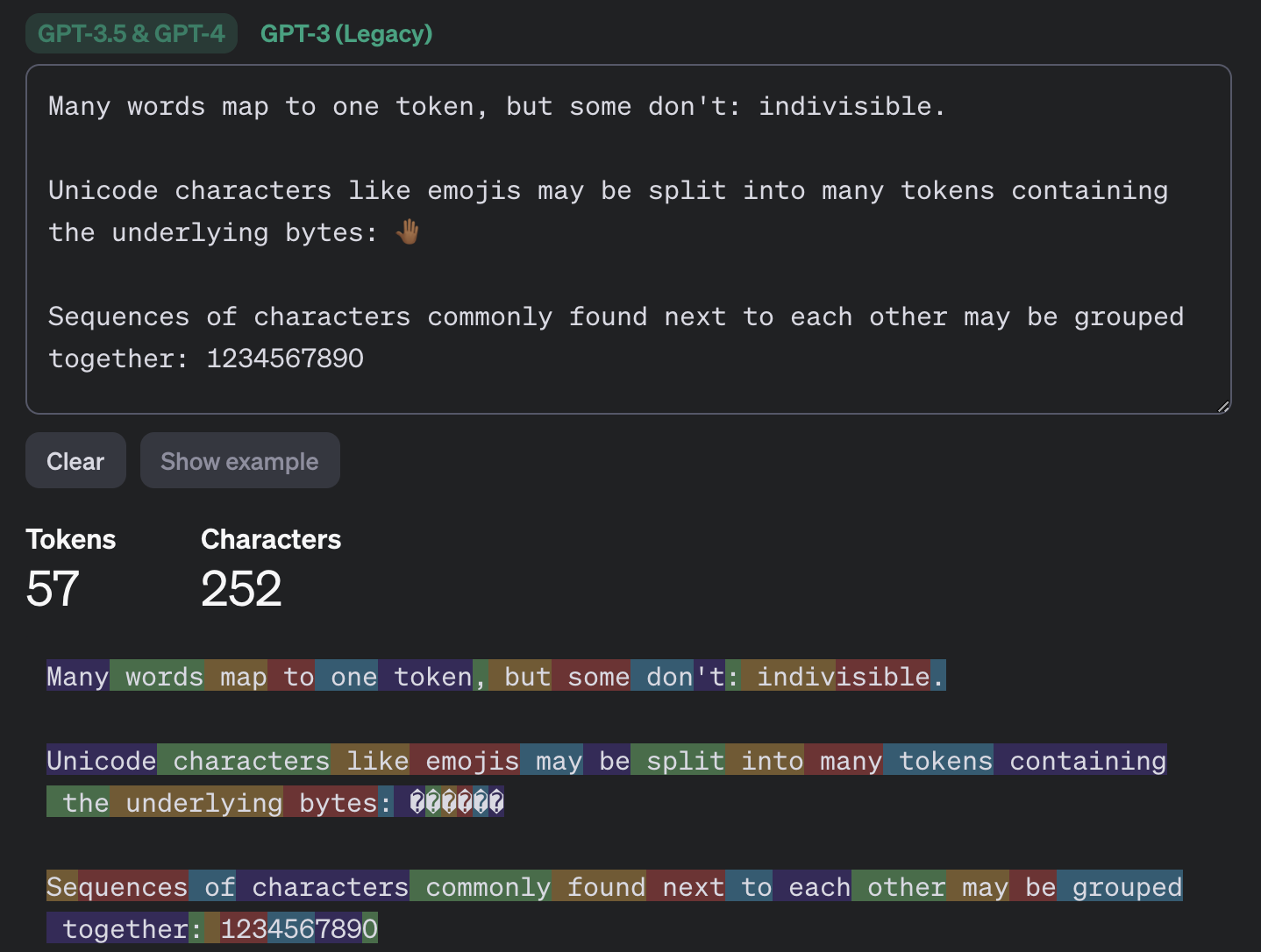
This example shows how the GPT-3.5 and GPT-4 models split messages into tokens. Source
The same thing happens when a chatbot converses with a person. A language model doesn’t actually reason on its own. It’s calculating which words and phrases are most likely to follow one another in order to produce a response that fits your query. That means chatbots will sometimes give incomplete or flat-out wrong answers, no matter how often they’re updated or retrained. A vivid example: just two years ago, popular chatbots confidently assured users that the word “strawberry” has two letters “r” instead of three. Mistakes like these are commonly known as hallucinations.
Many chatbots can also search the internet for information. In that case, the AI pulls in data from an outside source, but it still uses its own internal algorithms to put the answer together. And search results themselves can include outdated posts, advertising content, tabloids, and other questionable sources.
How to help your child use AI wisely
Talk to them about how AI can get things wrong
We’ve already seen that artificial intelligence isn’t immune to errors. Unfortunately, hallucinations aren’t the only issue. Even when a chatbot is working from accurate information, it can still present it in a misleading way by leaving something out, putting the emphasis in the wrong place, or drawing a questionable conclusion. Sometimes the result depends on factors a user would never think to consider when asking a question.
One surprising factor is simply what language you’re using. Most of the data that major models are trained on is in English, so these systems tend to perform better in English. The same AI model might answer a question correctly in English but get it wrong when asked the exact same thing in, say, Serbian. This gap shows up most in fields such as science, medicine, technology, and law, where there’s simply far more high-quality English-language material for the model to draw on.
Another quirk of chatbots is that they get worse as you feed them more information. Studies show that the more text and data a model has to work with, the harder it is for it to keep track of details, connect information from different parts of a conversation, and answer questions that require real depth of understanding. Therefore, uploading an entire book to a chatbot and asking detailed questions about it is a surefire way to trigger hallucinations.
It’s also worth questioning not just what the AI tells you, but the way you ask your questions in the first place. Chatbots often try to please the user, and will shape their answer to match the user’s apparent point of view. For example, the same chatbot might give opposite answers to “Why is the Earth overpopulated?” and “Why isn’t the Earth overpopulated?”, each time building its response around the assumption baked into the question. One recent study found that even the most advanced language models failed to challenge false premises in 26–42% of cases.
Let AI help with learning, not do the learning
Many a former student knows that copying others’ work is an art unto itself — one that takes exceptional skill and at least some engagement with the material (sometimes even a fair amount). These days, unfortunately, even that skill is at risk of disappearing: the temptation to copy an answer that took only a few seconds to generate is simply too strong. But chatbots are far from straight-A students themselves.
In one study, researchers had three popular chatbots sit a chemistry exam, and compared their scores to those of real students from 2009–2023. The students came out ahead. Chatbots will sometimes land on the correct answer, but arrive at it via a chain of flawed reasoning, so their answers could just as easily be wrong.
So it’s worth explaining to your child that having AI write essays from scratch, or solve equations without then double-checking them, is a dead end. On top of that, in a real job they’ll be judged on actual skills and knowledge, and chatbots won’t help them fake the expertise. What AI can genuinely help with, without getting in the way of learning, is explaining difficult topics and working through mistakes. Here are some examples:
If a topic is hard to make sense of
- “Explain this topic in simple terms: {insert topic}”
- “Explain this topic using a real-life example: {insert topic}“
- “Here’s the part I don’t understand: {insert text}. Walk me through it step by step”
- “Explain this topic in simple terms first, then in more technical terms: {insert topic}“
- “Here’s a question: {insert question}. Don’t give me the answer. Ask me guiding questions so I can work it out myself”
Math and other exact sciences
- “Give me a hint for the first step, but don’t solve the whole problem: {insert problem}“
- “Look at my solution and tell me where I made a mistake, but don’t fix it for me: {insert problem and solution}“
- “Come up with a similar problem for me to try: {insert problem}“
- “Here’s my answer: {answer}. Ask me questions so I can check whether I solved it correctly”
- “Explain why this formula applies here: {insert problem}“
Essays and written assignments
- “Ask me five questions on this topic so I can come up with my own thesis and arguments: {insert topic}“
- “Here’s a draft of my essay. Try to find gaps in my logic or places that need more detail: {insert draft text}“
- “Look at my essay outline and tell me what’s missing: {insert essay outline}”
- “Point out places in my writing where the idea isn’t clear, but don’t rewrite it for me: {insert text}“
- “Pretend you’re an experienced teacher and try challenging my argument: {insert text}“
Language learning
- “Have a conversation with me in {insert language} at an A2 level. After I respond, correct my mistakes”
- “Give me five sentences to translate using this grammar structure: {insert grammar structure}“
- “Explain this grammar rule and give me some examples: {insert grammar rule}“
- “I’ll write a sentence, and you tell me if it has a mistake. Give me a hint first, and only show me the correct version after my second attempt. {insert sentence}“
- “Write a short dialogue in {insert language} where I have to answer as one of the characters”
Knowledge testing
- “Quiz me with 20 questions on this topic: {insert topic}. Ask one question at a time, and don’t show the answer right away”
- “After each answer, only explain what I got wrong”
- “Start with five easy questions, then ask five hard ones”
- “Make the questions harder each time I answer correctly”
- “Based on my mistakes, tell me which topics I should review”
Fact-check AI responses together
Make sure your child understands that they shouldn’t blindly trust what a chatbot tells them — even when it cites other sources. And asking the same chatbot to double-check its own work isn’t a great idea either; there’s a real chance it will make the same mistakes twice, or even pile up the errors.
Take any chatbot answer and go through it together, breaking it down into individual statements and asking questions about each one. Where did that date or number come from? Is the AI citing a specific person, publication, or study? Is the quote actually something that person said? If the chatbot includes a link, open it and check how accurately the AI actually represented it.
While you’re at it, take a look at the quality of the source itself. If something is written in an overly emotional tone or makes bold claims without backing them up, that’s a good sign to look for information somewhere else.
Protect your child and their accounts
Anything your child shares with a chatbot ends up on that company’s servers, and it’s used to further train the model by default. Over the past few years we’ve seen that even the biggest companies aren’t immune to bugs and data leaks. To lower the risk of your child’s information leaking and to keep their account secure, follow a few simple rules:
- Make sure your child understands that AI isn’t a private diary. Tell them not to share their name, home address, school, or any other sensitive information with a chatbot.
- Adjust the chatbot’s privacy settings. At the very least, turn off memory and any “improve the model” or training features. It’s also worth reading our detailed guides on setting up privacy and security in ChatGPT and DeepSeek.
- Update the password. Most chatbots require an account, so to keep your child’s from being hacked, set a strong password that isn’t reused anywhere else. Whether your child’s password follows the classic “mother’s maiden name plus birth year” formula or uses popular meme words like “skibidi”, we have some bad news: passwords like these get cracked really fast. Instead of coming up with and memorizing passwords, it’s better to let an encrypted password manager generate and store them.
- Turn on two-factor authentication. This adds an extra hurdle for anyone trying to break into your child’s account. Rather than using a phone number as the second factor, it’s better to use login codes generated and automatically refreshed in a password manager.
- Use anti-phishing protection. Beyond fake websites that impersonate legitimate AI services, there’s another risk: chatbots sometimes hand users links to phishing sites (fake pages designed to steal personal information). Kaspersky Premium blocks access to suspicious sites and keeps scammers from stealing your family’s data and money.
- Know what your child is doing online. Along with a password manager and protection from malware and phishing, Kaspersky Premium includes Kaspersky Safe Kids, which lets you set up parental controls, restrict unwanted content, and keep track of how much time your child spends online.
What else to read about keeping kids safe online and at school:
- Keeping kids safe online: a practical guide for parents
- How to help your kid become a blogger without ever worrying about their safety
- How hackers target Gen Z
- Choosing wisely: a guide to your kids’ first gadget
- Back-to-school threats: gadgets
- Back-to-school threats: virtual classrooms and videoconferencing
- Back-to-school threats: social networking
- Back to School Security Tips
 Tips
Tips